The 2024 Illinois Energy Conservation Code (based on the 2024 IECC with Illinois-specific amendments) is the current version. CDB adopted it via rulemaking (approved by the Joint Committee on Administrative Rules), and it became effective November 30, 2025, for all new permits statewide (except Chicago, which maintains its own home-rule code). Illinois amendments focus on items like wall insulation credits, attic reductions, and above-code programs—they do not alter the base 2024 IECC fenestration U-factor or SHGC tables.4840

New Requirements for Northern Illinois (Climate Zone 5A)

Northern Illinois (most counties north of roughly I-70, including the Chicago metro, Joliet, Harvey, etc.) falls in Climate Zone 5A. Requirements apply to new construction, additions, alterations, and replacements (the new window/door must comply). Products must be NFRC-labeled with tested values; area-weighted averaging is allowed.

Residential Buildings (Most Common for Homes/Patio Doors)

From Table R402.1.2 (prescriptive path; unchanged by Illinois amendments):42

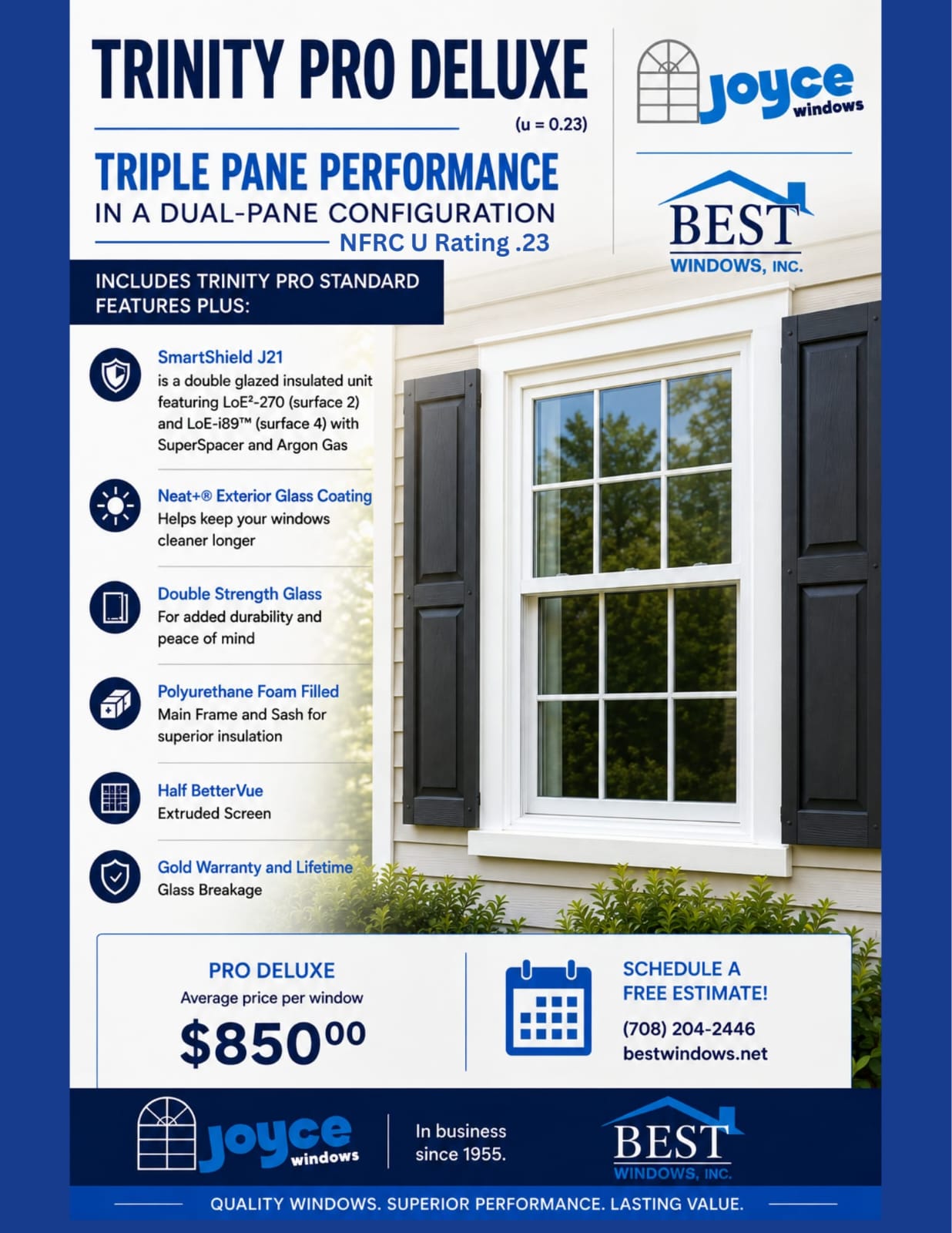
• Vertical fenestration (windows, glazed doors, sliding/glazed patio doors): Maximum U-factor 0.28 (improved from 0.30 under the prior 2021 code). This is the entire assembly (frame + glazing); vinyl frames easily meet it with low-E glass.

• Skylights: Maximum U-factor 0.50.

• SHGC (Solar Heat Gain Coefficient): No Requirement (NR).

• Air leakage (mandatory): Sliding glass/patio doors ≤ 0.3 cfm/ft² (tested per NFRC 400/AAMA); swinging doors ≤ 0.5 cfm/ft².

Other paths (UA alternative, ERI, or performance) allow trade-offs, and better-than-code fenestration earns credits under R408. Opaque doors follow wall assembly rules.
Commercial Buildings

Table C402.4 (or equivalent):

• Fixed vertical fenestration: Typically max U-factor 0.34 in CZ 5 (improved from prior).

• Operable/sliding: Higher allowance (often ~0.45).

• Fenestration area ≤40% of gross wall (with exceptions).

• Stricter air-barrier and leakage rules apply.

Enforcement: Local building departments (or CDB for state projects). Use REScheck/COMcheck for compliance. Check your municipality for any stretch code adoption (optional and stricter).
This update delivers ~7–8% energy savings over the prior code while keeping flexible paths. Older permits (pre-Nov 30, 2025) follow the 2021 code. For the full text, see the ICC Digital Codes platform (2024 Illinois Energy Conservation Code) or CDB’s site. Always confirm with your local code official, as project specifics or interpretations apply. Federal incentives (e.g., ENERGY STAR, IRA credits) often require even better performance.